Pinochet-era dictatorship and state terror
My Tender MatadorPinochet-era dictatorship and state terror are the political conditions that turn ordinary routines into risks and bind the Queen of the Corner’s personal life to Chile’s public crisis. The novel presents state power through broadcasts, police violence, military searches, and fear of arrest, while showing how a person initially wary of politics comes to recognize the human cost of repression and is eventually driven from her home.
Political Life in the Neighborhood
The dictatorship first enters the Queen’s daily life through the neighborhood grocery store, where residents exchange news about demonstrations, opposition statements, threats from the Dictator, and hopes that 1986 will be the year he falls. Radio Cooperativa carries urgent reports and protest songs into the same domestic world where the Queen embroiders tablecloths for wealthy clients and listens instead to old popular songs. She is frightened by the station’s bad news and keeps apart from the political fray, but the broadcasts make clear that political anxiety is shared across the block, even among people whose immediate concerns are unemployment and credit at the local shop.
That distance begins to narrow as reports acquire names and faces. After hearing that students injured in a university riot have been handed to military authorities, the Queen anxiously wonders whether Carlos has been arrested. When a government communiqué announces that a subversive plan for September has been uncovered, she seeks more reliable information from Radio Cooperativa. Its report on a vigil at the Plaza de Armas, organized by the Organization of Families of Detained and Disappeared Persons, brings her to tears. The language she uses changes with that recognition: she now dares to call the system a dictatorship rather than the military government, a term used by her politically conservative friend Lupe.
Repression in the Streets
Political violence becomes immediate when the Queen goes downtown and encounters a police officer as she bends to pick up a leaflet calling for a September demonstration. He strikes her with a baton and orders her to leave. The episode makes repression personal without making it exceptional: she understands the beating as part of a system in which the police can assault, torture, or kill people with the tyrant’s consent. Her anger turns toward Carlos and his friends in the Manuel Rodríguez Patriotic Front, whom she imagines answering the violence in kind.
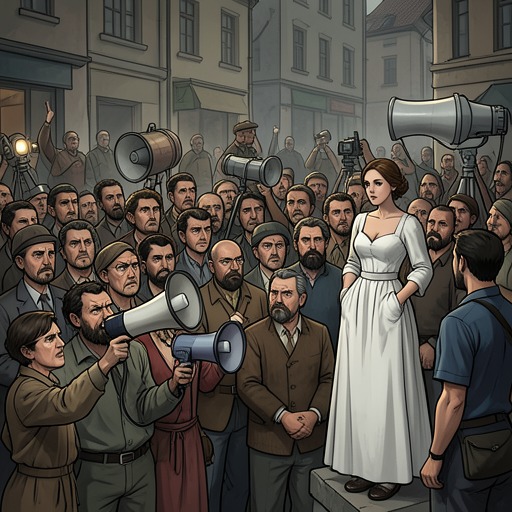
At the Plaza de Armas, the Queen sees women holding photographs of relatives who have been arrested and disappeared. Their demands for justice and for information about the missing give the abstract news a human form. Invited to join them, she takes a placard bearing the photograph of a disappeared person and adds her voice to the protest. Among the women she feels unexpectedly safe and does not feel ashamed of her high-pitched voice. The police arrive to break up the gathering, however, and she has to flee through the plaza amid tear gas. She keeps the photograph, folding it carefully into her pocket; the act of carrying it links her private journey back through the city to the families’ public demand for remembrance and justice.
The Dictatorship’s Private Face
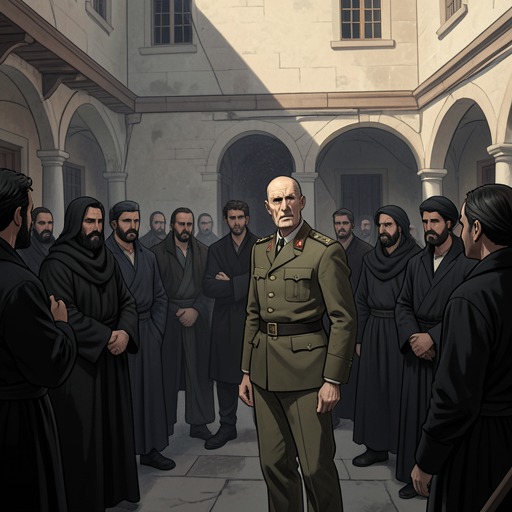
The novel also depicts state power from inside the Dictator’s household, setting the machinery of repression beside private fear and domestic performance. In a remembered account of how Augusto Pinochet and Lucy met, the Dictator’s public authority is contrasted with the young officer who first asked a seventeen-year-old student to dance at a Club Militar party. The recollection does not soften the violence of the regime; instead, it places the ruler’s personal history beside the present-day household in which Lucy talks and he lies in a daze, withdrawn from her company.
His private imagination repeatedly turns toward war, death, and threatened authority. On his birthday, he dreams of the childhood toy soldiers and military sets that surrounded him, recalling that he had regarded his classmates as enemies even as a boy. Later, after seeing a newspaper photograph of himself in dark glasses described as a mug shot, he rages that his opponents should have been crushed in 1973. The remembered image also prompts the thought that he wore the glasses so no one could see his eyes as people were dying. In another episode, he dreams that condors attack him on his terrace and wakes in fear, surrounded by bodyguards and reassured that it was a nightmare. These scenes expose his fear and self-consciousness, but the political force of the novel’s account lies beyond his psychology: his government’s capacity to detain, search, and terrorize people remains active whether or not he feels secure.
Siege and Forced Departure
After the ambush on the Dictator’s motorcade, Santiago becomes a city under military control. The army cuts off roads in and out, soldiers search cars, homes, and whole neighborhoods, and residents may be made to stand through the night in football fields. People are beaten or taken away to trucks on slight pretexts. Radio Cooperativa relays an official instruction telling citizens to stay home, remain vigilant, and report anything suspicious. The announcement presents enforced watchfulness as civic duty, even as the searches create danger for anyone who might be suspected.
The Queen spends the night at home unable to sleep, keeping the kettle ready in case Carlos or his friends arrive and leaving the radio low for news. The fear becomes a direct threat the following morning, when Laura tells her that the other safe houses have been searched and that hers will be next. The secret police may arrive within hours; Laura says the Queen must leave Santiago both for her own safety and to protect others. The Queen resists because leaving means abandoning the house she has made her own, but the urgency is clear: continued residence could endanger everyone connected to the network.
Before leaving, the Queen spends the night erasing signs of her presence. She burns papers bearing telephone numbers and addresses, sweeps away footprints, washes windows, and dusts surfaces in case fingerprints are found. By dawn, her possessions are packed into two bags. She looks out from the roof at the city she is about to lose, then leaves when the car arrives. The searches and the threat of arrest thus produce more than a temporary interruption: state repression separates her from her home and breaks the life she had built there.
Narrative Significance
The novel connects dictatorship to small, concrete acts: listening to the radio while doing household work, deciding whether to pick up a leaflet, carrying a photograph, keeping a kettle ready, and destroying address papers before flight. These details show political terror spreading through ordinary space rather than remaining confined to official announcements or dramatic confrontations. The Queen’s movement from frightened listener to participant in a vigil does not erase her vulnerability; it makes visible how solidarity can emerge within it.
The narrative also places the Dictator’s nightmares and household scenes beside the state’s treatment of citizens. His fear of exposure and loss of control sits against the real fear experienced by people searched, detained, or made to disappear. By following both the ruler’s private world and the Queen’s threatened home, the novel distinguishes the anxieties of power from the consequences power imposes. The Queen’s departure is the clearest personal consequence: the regime’s reach is measured not only in public violence but in the home she must abandon and the farewell she cannot complete on her own terms.